Last updated: January 2026
---
Table of Contents
- What “kitchen remodel cost” really means
- Typical 2026 price ranges in Carlsbad
- The biggest cost drivers
- Allowances explained (in plain English)
- How to compare bids without getting fooled
- Financing and payment planning (neutral overview)
- How to get an estimate
- Who we are
- What happens next
- Trust: licensing, insurance, permits, cleanliness, communication
What “kitchen remodel cost” really means
When a homeowner asks, “How much does a kitchen remodel cost in Carlsbad?”, what they usually mean is:
- What budget range should I plan for?
- What choices change the price the most?
- How do I avoid a bid that looks cheap but explodes later?
A kitchen is a system: cabinetry, counters, plumbing, electrical, ventilation, finishes, and the trades that coordinate them. Two kitchens can look similar in photos but cost very differently based on what’s happening behind the walls.
If you want the full overview guide first, start here: (See: )
Typical 2026 price ranges in carlsbad
Below are practical ranges we see for kitchen remodeling work in North County / coastal San Diego markets. These are not “averages.” They’re scope-based ranges that help you plan realistically. Final pricing depends on layout changes, finish level, and site constraints (HOA rules, access, condo protections, etc.).
Tier 1: Refresh (often ${25,000}–${45,000})
A refresh is typically a like-for-like update:- Keep the general layout
- Replace counters and backsplash
- Update sink/faucet
- Update lighting in a limited way
- Possibly refinish or replace cabinet doors (or swap cabinets if layout stays)
Common “gotchas”:
- older shutoff valves, leaky drain lines, or weak electrical circuits
- flooring transitions (if you run new flooring into adjacent spaces)
- long lead-times for countertop material
Tier 2: Mid-range remodel (often ${45,000}–${85,000})
Mid-range projects usually add function:- More meaningful cabinetry upgrades
- Improved lighting plan and electrical capacity
- New flooring
- Better storage solutions (pantry, pull-outs, trash centers)
- Ventilation upgrades
Common “gotchas”:
- panel capacity (adding circuits can require a larger electrical conversation)
- vent routing constraints (short duct runs aren’t always possible)
- drywall texture matching (especially if walls are opened)
Tier 3: Full gut / high-end (often ${85,000}–${160,000+})
Full remodels are where costs vary the most:- Walls moved/removed
- Plumbing or gas relocated
- Structural changes requiring engineering
- Custom or premium cabinetry and finishes
- Larger islands, specialty appliances, built-ins
Common “gotchas”:
- permitting and plan review time
- structural details (headers, beams, tie-ins to existing framing)
- coordination of multiple trades and longer schedules
A practical way to sanity-check your budget
If you’re trying to decide whether your target budget is realistic, don’t start with “price per square foot.” Kitchens aren’t priced that way because the expensive parts (cabinets, counters, appliances, trades) don’t scale evenly with room size.
A better approach is to ask:
- Are we changing layout or moving utilities? If yes, plan for more labor, more coordination, and likely permits.
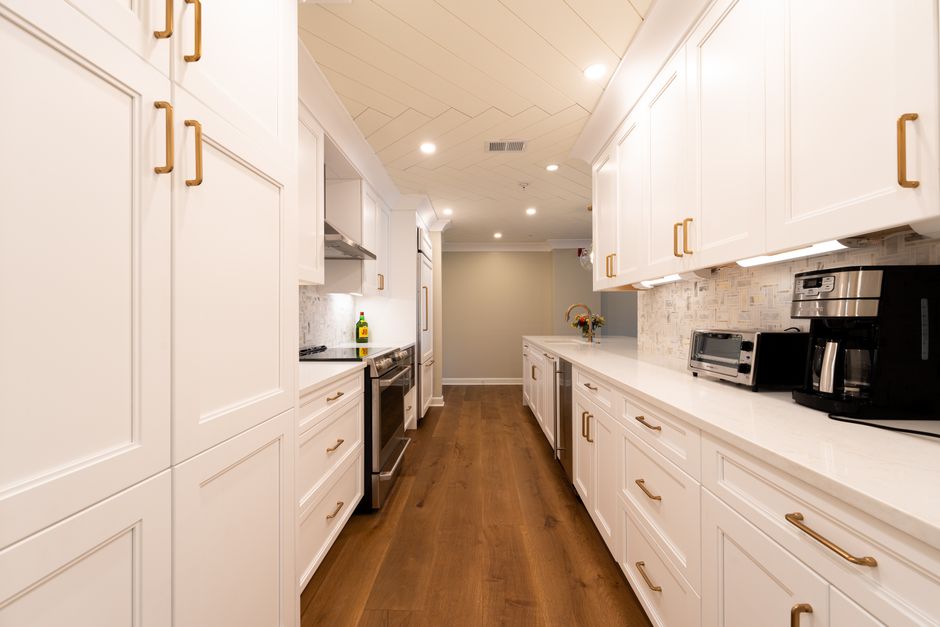
- What finish level are we expecting for cabinets and counters? “White shaker” can mean very different price points depending on cabinet construction.
- Are we upgrading ventilation and electrical capacity, or just swapping finishes?
- Is the home older, coastal, or a condo with extra protections required?
As a rough reality check, many kitchens end up concentrated in a few big buckets:
- cabinetry (often the largest)
- countertops (material + fabrication)
- trades (electrical, plumbing, drywall, flooring)
- protection/cleanup and disposal
- permits/engineering when scope triggers them
If you want, we can walk your priorities and give you a straight answer on where your plan lands: refresh, mid-range, or full gut. (See: How to get an estimate.)
The biggest cost drivers
If you want to control cost, focus on these levers:
1) Cabinetry (often the biggest line item)
Cabinet pricing can swing widely depending on:- stock vs semi-custom vs custom
- door style and finish
- interior upgrades (pull-outs, organizers)
- complexity (tall pantry walls, appliance panels, custom hoods)
2) Layout changes (moving plumbing/gas)
Moving a sink or range usually means:- opening walls or floors
- re-routing lines
- inspections (if permitted)
- higher risk of surprise conditions
Keeping plumbing “close” to its original position is one of the simplest ways to reduce cost without sacrificing style.
3) Electrical and lighting
A good lighting plan improves daily life, but it can require:- new circuits
- GFCI/AFCI compliance updates
- under-cabinet wiring planning
- smart switch considerations
4) Countertops
Material is one part. Fabrication details matter too:- edge profiles
- sink cutouts
- seams and overhang supports
- backsplash height decisions
5) Flooring and subfloor work
Kitchens reveal subfloor issues. If there were leaks, or if the house is older, you may need:- leveling
- patching
- localized repairs
6) Permit and inspection requirements
Permits are more likely when you move utilities or touch structure. Permits also add coordination steps and schedule constraints. (See: )Allowances explained (in plain English)
An allowance is a budget placeholder for something you haven’t selected yet.
Example: You know you want a tile backsplash, but you haven’t chosen the exact tile. A (858) 434-7166 or request a quote at (858) 434-7166 Email: calidreamconstruction@gmail.com Website: local remodeling experts to discuss your remodeling goals. Our team specializes in Carlsbad home renovations and understands the unique needs of local homeowners.